
PoE Guide: Trials of the Ancestors – How to Build Winning Teams, Climb Rankings, and Maximize Tournament Rewards
Summary
Trials of the Ancestors returns as a limited-time Path of Exile event, bringing back its unique tournament system alongside the core endgame. Unlike traditional combat encounters, success depends on understanding team composition, battlefield objectives, and strategic positioning. This guide explains how the mechanic works, how to build an effective team, and when different strategies become more efficient as tournament rankings increase.
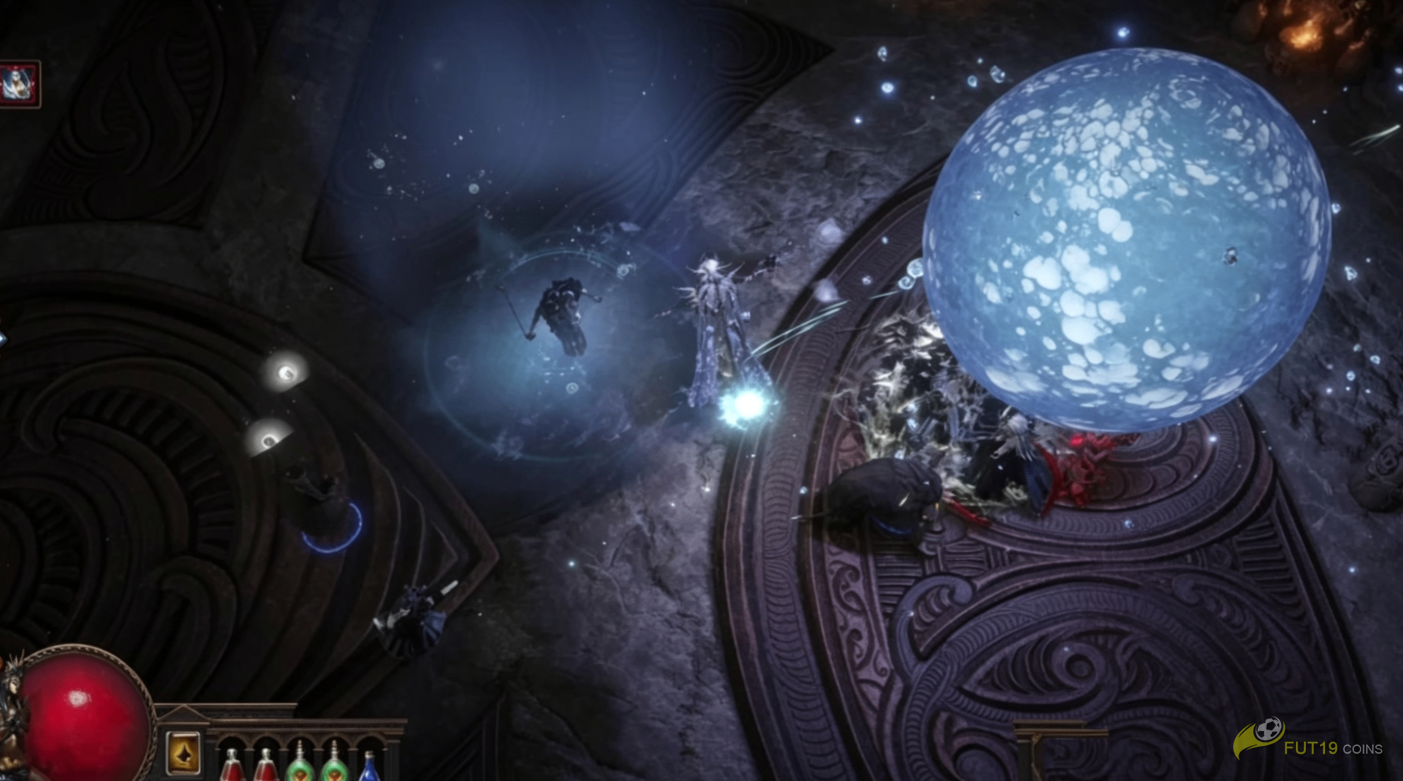
Understanding the Tournament Structure
Entry into each tournament requires a Silver Coin, which drops in the core game but cannot be obtained inside the tournament itself. Players who focus exclusively on Trials of the Ancestors should prepare a supply beforehand or acquire additional coins through trading.
The tournament follows a double-elimination format. One defeat does not immediately eliminate your team, giving you opportunities to recover. However, maintaining a winning streak remains valuable because it provides greater flexibility during later rounds, especially when evaluating reward choices.
How Victory Is Achieved
Winning a match is not primarily about defeating every enemy.
Each combatant is linked to a totem, and permanently removing opponents requires channeling their totem for several seconds. Once successfully completed, that unit is eliminated from the remainder of the battle.
This creates a different objective from standard Path of Exile encounters. Rather than maximizing damage alone, players must balance combat, positioning, and battlefield control to create safe opportunities for their allies to destroy enemy totems.
Learn the Respawn System
Defeated units are temporarily removed from combat before returning after a short delay.
Each additional defeat increases that downtime, allowing your team more opportunities to channel enemy totems safely. Since both friendly and enemy units follow the same rules, managing respawn timers becomes an important tactical advantage throughout each match.
Players should also remember that taking any hit while channeling immediately interrupts the process and causes a lengthy stun, making battlefield awareness essential before attempting to remove a totem.
Build an Effective Team
Your AI companions contribute significantly to every battle.
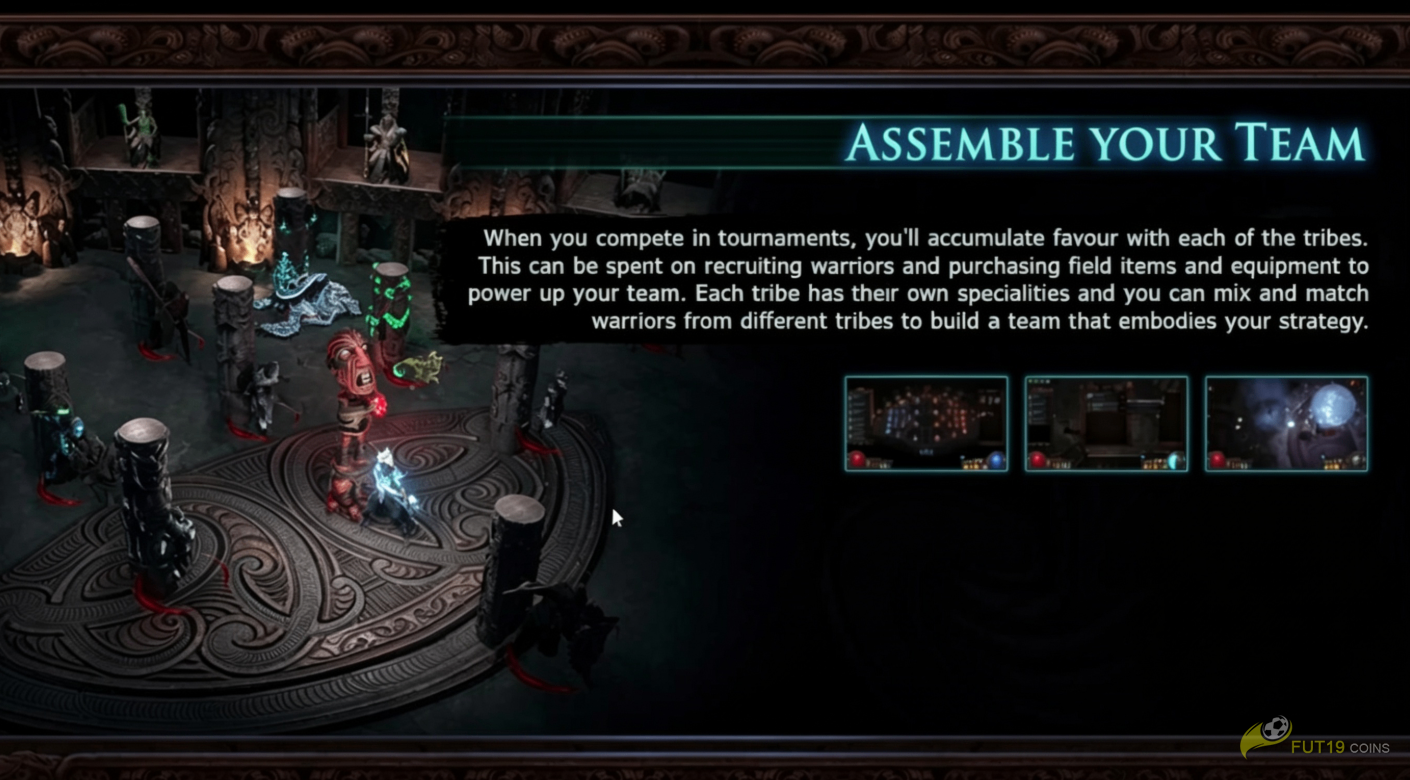
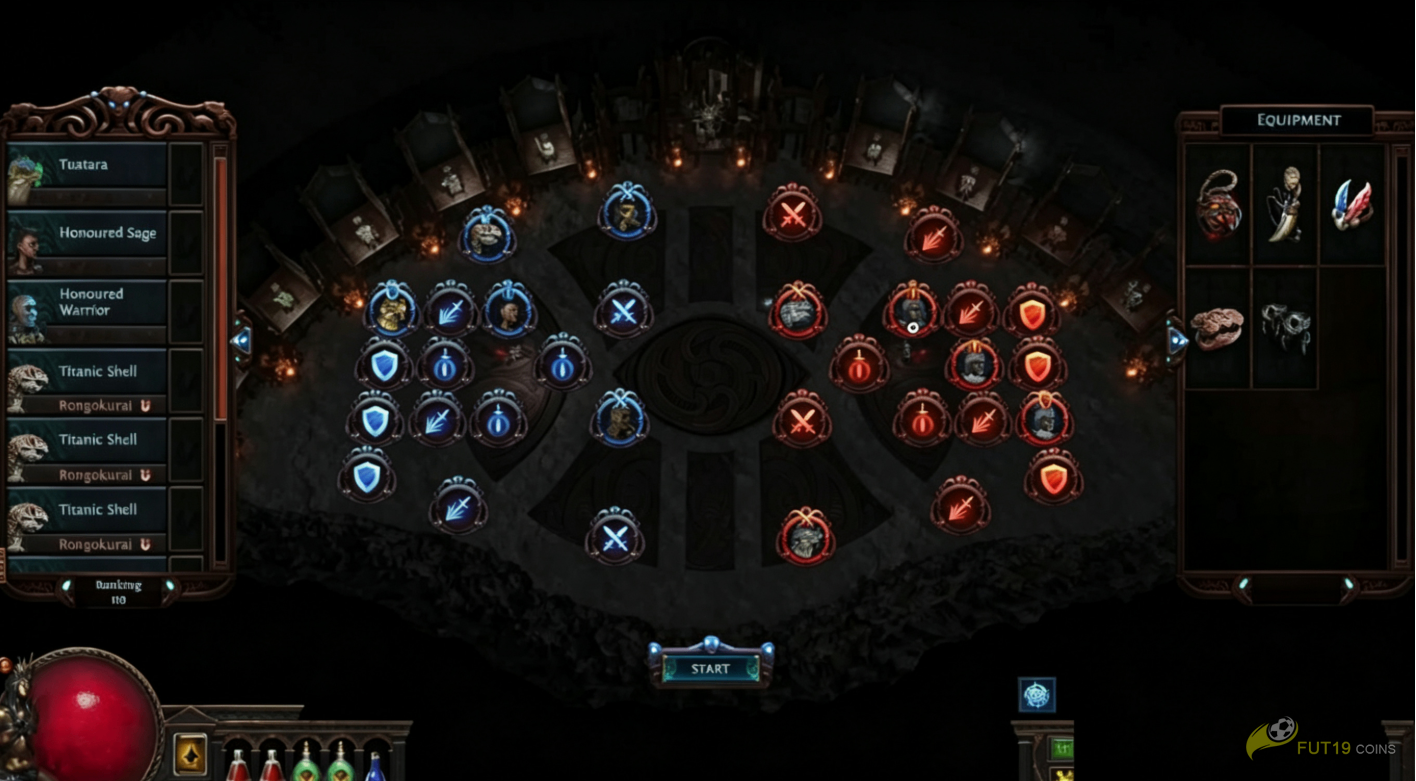
Units can be assigned to four battlefield roles:
Flankers
Attackers
Midfield
Defenders
Among these, Flankers are generally the highest priority because they actively seek opportunities to channel enemy totems instead of engaging every opponent directly.
Fast and agile units perform best in flanking positions, while slower, durable units are better suited to attacking roles. Defensive positions should usually be filled with lower-priority units, preferably ranged characters that can disrupt advancing enemies.
A well-balanced team often performs more consistently than relying solely on a powerful player character.
Spend Favor Efficiently
Favor functions as the tournament's temporary currency.
Since Favor does not carry over between tournaments, it should always be spent before completing the event.
Early rounds should prioritize recruiting stronger units because they remain useful throughout the tournament. Equipment becomes more valuable later, especially when assigned to expensive, high-impact units rather than inexpensive recruits.
Field items generally offer lower value than additional units, making them a lower priority for most players.
Choose Between Fair and Specialized Strategies
Trials of the Ancestors supports two distinct approaches.
The first relies on building a powerful combat character capable of defeating enemy champions while teammates capture objectives. This traditional strategy works well throughout early and mid-level tournament rankings.
The second focuses on mobility and avoidance rather than damage. Instead of eliminating enemies, these specialized characters distract opposing teams while allied units remove totems. High evasion, block, spell avoidance, and movement speed become more valuable than raw offensive power in this approach.
Choosing the appropriate strategy depends largely on tournament rank and your character's progression.
Adapt as Rankings Increase
Tournament difficulty increases steadily as rankings rise.
Moderate rankings remain manageable for conventional builds with strong equipment and balanced defenses. However, extremely high rankings dramatically increase both enemy health and damage output.
Eventually, many standard builds struggle to eliminate opponents efficiently, making specialized objective-focused strategies increasingly effective. Players intending to climb to the highest rankings should prepare for this transition instead of relying on direct combat alone.
Prioritize Rewards Throughout the Tournament
Each round presents multiple reward options.
Early in the tournament, Favor often provides the greatest long-term value because it strengthens your team for future matches. As fewer rounds remain, immediate rewards such as currency, tattoos, and valuable items become increasingly attractive.
Completing the entire tournament grants exclusive rewards unavailable through normal gameplay, including several powerful tattoos that may hold significant value depending on league demand.
Managing these rewards wisely can generate a steady supply of POE orbs, helping fund future character upgrades while maintaining efficient progression throughout the event.
Avoid Outdated Strategies
Not every historical guide remains accurate.
Several early strategies relied on mechanics that were heavily adjusted shortly after the original league launched. Builds centered around permanent knockback, forced fleeing, or similar crowd-control interactions no longer function as originally designed.
When researching builds, prioritize resources created after those balance changes to avoid investing in outdated strategies.
Conclusion
Trials of the Ancestors remains one of Path of Exile's most distinctive league mechanics because it rewards tactical decision-making alongside character strength. Success depends on understanding the tournament structure, assembling an effective team, allocating Favor efficiently, and adapting strategies as rankings increase. By balancing objective control with combat effectiveness, players can consistently complete tournaments and earn valuable exclusive rewards throughout the event.